EPDs and the Changing Role of a Contractor
Building projects that use products containing Environmental Product Declarations (EDPs) are now getting credit due to industry organizations such as LEED v4, Architecture 2030 and Healthy Building Network. The new LEED v4 standards require manufacturers to publish EPDs and contractors will undoubtedly begin to see the transition as more companies adopt the new standards.
“To reduce the building sector’s contribution to climate change, it is critical that we get a handle on the embodied carbon impact from building products,” said Edward Mazria, CEO & Founder of Architecture 2030, a non-profit organization focused on protecting the global environment.
What is an EPD?
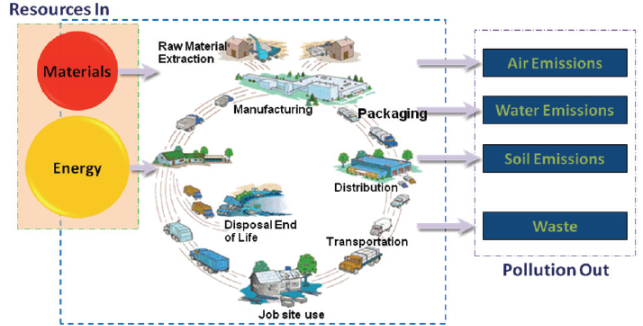
An EPD is a third party verified document, which consists of data from a product’s Life Cycle Assessment (LCA) that describes its environmental impacts, such as global warming potential, smog formation and water use. Think of an EPD as a nutrition label. Instead of telling you nutritional impacts about the food you are eating, an EPD tells you the environmental impacts about the building products you are using.
Why is this important?
By providing EPDs, there is a higher level of transparency for the products being used in a building project, as this continues to become increasingly important to customers. More transparency leads to better product performance. In addition to the transparency that customers are looking for, EPDs allow different products to be compared with verified information on their environmental impact, offering an extended set of product attributes.
How do EPDs affect contractors?
EPDs allow contractors to make better-informed decisions on the impact of the products they are using. As part of LEED certification, architects and GCs will require contractors to verify which building products have EPDs during the submittal process. EPDs may be readily available, depending on the product manufacturer and supplier. In the future, contractors can expect submittal sheets to incorporate EPD information. A national supplier like ABC Supply Interiors will be able to help you determine which products on your checklist offer EPDs.
To learn more about LEED v4 requirements and to access the LEED credit library, visit www.usgbc.org/credits.
The information provided is for general informational purposes only. All information provided is in good faith, and is not intended as a substitute for obtaining accounting, tax, legal, or financial advice from a professional accountant or lawyer. Any opinions expressed are those of the author. ABC Supply Interiors makes no warranties of any kind, express or implied, regarding, the accuracy, adequacy, validity, reliability, availability, or completeness of any information provided herein. Any questions regarding the information provided should be addressed to the author.

ABC Supply Interiors Opens Four New Locations
Doors open in Arizona, Illinois, Nebraska and Texas BELOIT, Wis. — October 6, 2026 — ABC Supply Interiors, formerly L&W Supply Corporation, a nationwide distributor of interior building materials and construction supplies, recently opened four new locations in Arizona, Illinois, Nebraska and Texas. The new branches expand ABC Supply Interiors’ ability to support contractors in […]

ABC Supply Announces CIO Leadership Transition
Tony Vaden to Retire as Chief Information Officer; Larry Sullivan Named Successor BELOIT, Wis. – October 6, 2026 – ABC Supply Co., Inc., the largest wholesale distributor of roofing, select exterior and interior building products, and outdoor solutions in North America, has announced that Chief Information Officer Tony Vaden will retire effective Jan. 1, 2027, […]